
A Random Image

Go Back   Iran Defense Forum > International Defence > Military Articles
Register Top PostersFlashChat Blogs FAQ Gallery Members List Calendar Arcade Search Today's Posts Mark Forums Read

Military Articles World Military articles - Post articles here not linking to the article!

Reply
 
Thread Tools Display Modes
  #1  
Old 08-24-2006, 04:27 AM
SS_Charlemagne SS_Charlemagne is offline
General
 

Join Date: Aug 2006
Posts: 1,779
SS_Charlemagne is on a distinguished road
Default Iranian military procurements

I have found this article that I copied from a web - I can't remember the source, sorry, but I think is dated in 2001 or 2002. Possibly it had been posted before, although I never saw it in this forum.

Iran's Procurement and Defense Production/ Research & Development Program
An overview of Iran's Defense Production and Research & Development programs along with Procurement.

DEFENCE PRODUCTION

Iran's state-run defence industry has expanded considerably and the country has been exporting equipment to the Middle East and elsewhere. Great investment has been made in new equipment and facilities for research, development and production. Some equipment items are based on foreign designs, mainly Chinese or Russian, while others have been developed entirely in Iran. Key product lines include missiles, ammunition, armaments, vehicles, communications, marine, chemical and aviation, with each of these organised as an industry. The most significant growth area is missile industries, equipment being produced ranging from Anti-Tank Guided Weapons (ATGW) to long-range artillery rockets designed and built in Iran. In certain areas Iran is still obliged to import components or equipment from abroad. For instance, it was reported in June 2003 that Iran had successfully completed the eighth, and successful, test on its indigenously produced Shahab-3 Medium-Range Ballistic Missile (MRBM).

Iran's modern defence industrial base was developed during the Shah's era (1941-1979) by an import substitution strategy, in which Iran would learn to produce, assemble, repair and maintain military equipment. The US and the UK were principal suppliers of aircraft, armour, and small arms. Beginning in the mid-1970's, Iran signed agreements on the co-production of computer and electro-optic equipment. Four state-owned organisations constituted the main elements of the defence industrial base. The Military Industries Organisation (MIO) was the main control centre, and also produced small arms, rockets, mortars, and artillery. The Iran Aircraft Industries (IAI) focused on fighters, the Iran Helicopter Industries (IHI) on helicopters, and the Iran Electronics Industry (IEI) on defence electronics.

Because of its extensive indigenous defence development efforts, Teheran is now looking to compete on the international arms market. For example, in June 2005, Chairman of the Majilis Defense Committee, Reza Talaii Nik, noted that Iran had begun to export its surplus defence products after it gained self-sufficiency in this sector. Currently, Iran's defence products have reportedly been exported to over 80 countries in the world.

post-revolution developments

After the revolution of 1979, the resulting Western arms embargo and the outbreak of hostilities with Iraq motivated both expansion of Iran's defence industries and the short term acquisition of arms on the clandestine market. In 1981 military production facilities were consolidated under a new Defence Industries Organisation of the Ministry of Defence. In 1983 the establishment of other military industries - which is under the control of the Iranian Revolutionary Guards Corp - was also authorised. By the mid-1980's, Iran had the capability to make armoured vehicles, light and heavy weaponry, some advanced missile systems, some aircraft parts, and artillery. Iran could also adapt imported missile systems components, assemble fighters and some tanks, and produced other modern systems under licensed production agreements.

By 1990, there were over 240 factories and some 12,000 privately owned smaller concerns producing armaments, employing about 45,000 people. By this stage, the Iran-Iraq war had provided the principal motivation for the expansion of the defence industrial base. The creation of a modern indigenous arms industry became an Iranian national goal. Large quantities of weaponry were needed, and there was a very high consumption of ammunition and logistics supplies. The international arms embargo, coupled with the rising costs of purchasing advanced equipment on the international market, forced the defence industry to focus on cheaper and less complex armaments. surface-to-surface missiles emerged as a primary focus.

In 1985 Iran decided to create a comprehensive missile production capability and associated technological base as a strategic national goal. Other areas of focus included small arms, artillery, and aircraft parts. In addition to its traditional areas, the MIO expanded to missiles and missile technology, and the IAI expanded to the repair of aircraft and aircraft engines, and the production of radar and air defence systems. The IRGC industries focused on missiles, missile warheads and aircraft. Iran also began to concentrate on the development of increased naval production capabilities. In all of these developments, direct and indirect technical help from many countries made it possible for Iran to rapidly expand the technical capabilities of its defence industrial base.

However, since these early post-revolution developments, the military industry has contracted, moving to more of a peacetime footing. In October 1994 parliament allowed the defence and logistics ministry to allocate staff and equipment to the civilian sector for the first time. Programmes on which they can work are limited to the establishing of engineering, laboratory and computer software research, development, design and manufacturing facilities. The ministry and DIO do not have carte blanche for construction and service industries. The law requires the Supreme Leader and Commander-in-Chief Ayatollah Khamenei's blessing for such activities. Official figures released in 1995 to support the ministry's bid for more freedom, stated that 45 per cent of the former DIO's military work was geared to civilian production. In recent statement from the Iranian government it asserted that defence industry conversion is working and that by 2000, the DIO had converted 75 per cent of its industry to civilian production.

According to Ali Akbar Torkan, Iran's defence minister in the late 1980s who launched the re-armament programme, the country produces the majority of its infantry weapons requirements, although he admitted at the time that "we are not skilled in the production of navy and air force equipment". Iranian technicians have mastered the art of reverse engineering and the repair and maintenance of some extremely sophisticated Western equipment however, including US HAWK surface-to-air missiles and the US TOW Anti-Tank system. The navy claims an ability to repair the gas turbine engines of major warships and to have the capability of constructing midget submarines.

The IRGC has its own defence industry for the manufacture of NBC equipment, Anti-Tank rockets (Shahin 1), grenades, 120 mm mortars and associated ammunition.

Types of domestic production

A domestically produced main battle tank, the creation of which was announced in March 1994, was another key step in Iran's effort to develop a domestic defence industry. The tank is named Zulfiqar. It is described by the IRGC Construction Crusade as an 'advanced tank' of superior manoeuvrability and speed. With the introduction of the Zulfiqar Iran became the third Middle Eastern state, after Israel and Egypt, to build Main Battle Tanks (MBTs). Like other states facing financial constraints, Iran apparently had adopted a two-pronged strategy of building indigenous (to all intents and purposes) MBTs while upgrading older ones. The Zulfiqar, for example, incorporates a significant amount of T-72 technology acquired from the former Soviet bloc. T-72s are also being built under licence. A key facility in this regard is the Shahid Kolahdooz Industrial Complex, which began mass production of the Zulfiqar and the Boragh tracked armoured personnel carrier in 1997. In late 1997 the DIO also unveiled two new fully tracked Self-Propelled Howitzers (SPHs) identified as the 122 mm Thunder 1 and the 155 mm Thunder 2, modelled on Soviet bloc variants. These developments have underlined the extent to which Iran is becoming self-sufficient in manufacturing key weapon systems. In April 2002 the DIO unveiled three new versions of the Boragh APC - a 120 mm Self-Propelled Mortar (SPM); an ammunition supply vehicle and an APC with improved armaments.

In December 1999 Iran said that it had started the mass production of an anti-armour guided missile with a range of 4,000 m. The laser-guided Tosan-1 can be fitted with night vision devices and is reportedly capable of accurately hitting targets in the dark up to 2,500 m away.

Sources in Paris assert that development of some battlefield tactical missiles has been curtailed through a lack of funding and the inability of the DIO to obtain the necessary technology. Work on the No-dong 1 series of ballistic missiles (a joint programme with North Korea), the new main battle tank, APCs and weapons of mass destruction have not been affected by the defence conversion programme. It is understood that these programmes are now under the control of the IRGC rather than the defence and logistics ministry.

In the area of military aircraft, Iran has been seeking to become self-sufficient in a number of areas by producing its own equipment. Devised to provide Iran with an indigenous fighter and jet trainer, Project Oaj has been completed and the Azarakhsh (Lightning) fighter and Dorna jet trainer are in production. The Parastu (Swallow) basic trainer entered service in 1997 and the 12th example was reported under construction in 2000. In addition, advanced design work has already been completed in Iran for an all-new advanced trainer and attack aircraft, known as the Shafagh ('the light before dawn'). The Shafagh is a subsonic aircraft with an empty weight of around 5,000 kg, an overall length of about 14 m and a 12 m wingspan. The aircraft has an ambitious aerodynamic configuration, with a close-coupled layout, substantial leading-edge root extensions and a highly unusual circular section at the wing root. The platform has been designed as an attack aircraft from the programme's outset, and is equipped with seven stores hard points - as three beneath each wing and one beneath the aircraft's fuselage centre-line.

Reports also suggest that the country's defence industries had made considerable progress in producing indigenous versions of foreign-designed SAMs. One of the Iranian defence industries highest priorities is the provision of effective anti-aircraft defence at low, medium and high altitudes. One such project, Project Ya-zahra, was understood to have succeeded in producing a reverse engineered version of the French Crotale low-to-medium range surface-to-air missile (SAM). Reverse engineering followed the capture of parts of the Crotale from Iraq during the Iran-Iraq war. Similarly, reverse engineered versions of the Russian S-75 Dvina/Volkhov (SA-2 'Guideline') SAM (Sayyed-1) and the British Rapier SAM were successfully tested in 1999.

In 1999 Iran revealed its first domestically produced helicopters, the Shabaviz ('Owl') 2-75, designed for military and civilian use, and a smaller reconnaissance version, the 2-61. During that year Iran also showed off all seven domestically-designed Unmanned Aerial Vehicles (UAVs). Iran's Qods Aviation Industries began designing, developing and manufacturing UAVs in 1985, initially to provide a cost effective reconnaissance capability during the Iran-Iraq War. The seven UAVs shown during a September 1999 parade were the Tallash I, Tallash II, Saequh I, Saequh II, Mohajer II, Mohajer III (Dorna) and the Mohajer IV (Hodhod). In 2002, the Iranian army announced plans to export indigenously-developed UAVs, although the army neither specified which type of UAVs were to be exported, nor to which countries they would be delivered.

In January 2000 it was reported that Iran had inaugurated a production line for the Tosan-1 Anti-Tank Guided Weapon (ATGW). Iran was also believed to be making a reverse-engineered copy of the Raytheon Tube-launched Optically-tracked Wire-guided (TOW) 3,750 m range ATGW, as well as the shorter range McDonnell-Douglas Dragon ATGW.

MILITARY RESEARCH AND DEVELOPMENT

Iran has an active and extensive military research and development programme which encompasses research on major battlefield equipment (MBTs, several types of SSMs, naval vessels and aircraft), chemical weapons and possibly nuclear weapons. Among the domestically-produced items delivered in recent years to the Iranian armed forces have been helicopters, tanks and new surface-to-air and surface-to-surface missiles. In addition, Iran continues to conduct research on military electronics, battlefield command and communications equipment, and integrated control systems. For instance, in January 2003, Minister of Defence and Armed Forces Logistics Ali Shamkhani attended the inauguration of 14 military projects at Shiraz's Electronics Industries. Among these projects were the Hasib radar system, which can be installed on all Iranian rotary- and fixed-wing aircraft that can reach an altitude of 50,000 ft (15,000 m), and a 4 km range air-to-ground missile system for Cobra helicopters. Other projects included lamps for radar systems and night vision binoculars.

Faced with a Western embargo since the start of the Iran-Iraq war, and confronted with US sanctions, Tehran embarked on a strategy of copying and developing military equipment. Many Iranian defence projects are believed to be based on the reverse-engineering of Western-built and other systems. The US has often expressed concern over the possible transfer of military technology to Iran from Russia, China and North Korea. Concern has also focused on Iran's emerging potential as a 'secondary supplier' of strategic technologies. US Defense Intelligence Agency (DIA) Director Vice Admiral Lowell E Jacoby testified before the US Congress that "Iran, like North Korea today, may have the capability to export complete missile systems." Presently, Iran is believed to be assisting with Syria's efforts to begin serial production of an extended-range version of its 'Scud-C' short-range ballistic missile by providing liquid-fuel technology and material. In early 2004, Iran and Syria signed a memorandum of understanding on defence co-operation.

PROCUREMENT

DEFENCE EQUIPMENT REQUIREMENTS

The pattern of Iran's procurement of military hardware has changed considerably since 1979, with its import partners changing from the US and UK to the former Soviet-bloc states, China and North Korea. In the 1990s it was Russia and China that met most of Iran's military imports. With access to Western sources of defence equipment blocked, the prospects for Iranian forces using post-1970s Western military hardware remains extremely remote.

In 2001 the US expressed serious concern over Russia's arms sales to Iran. During the landmark 11-15 March 2001 visit to Moscow by Iranian President Mohammad Khatami, Russian President Vladimir Putin confirmed that Russia would sell arms to Tehran, despite the US threats to impose sanctions on Russia.

Despite Iran-Russian military co-operation rhetoric, the future of Iranian defence imports promises to follow the relative decline of the past decade. This meant it has had no major replacements or modernisation of most of its western supplied weapons for nearly two decades. Even in current dollars, Iran's deliveries were worth only about one-ninth of the value of the arms it had imported during similar period in the Iran-Iraq War. They were only worth about one-fifth of Iran's imports during the four year period before the Gulf War. Moreover, the total value of arms transfer agreements by China with Iran fell from USD900 million to USD100 million during the periods from 1995-1998 to 1999-2002 respectively. The value of Russia's arms transfer agreements with Iran fell from USD400 million in the 1993-96 period to USD100 million from 1999-2002. It is estimated that Iran spent USD7.9 billion on its military forces in 1985, or roughly 7.7 per cent of its GDP. It spent USD3.128 billion in 2001 (2.7 per cent of GDP) and USD4.9 billion in 2002. Comparatively speaking, these are marginal outlays and represent less than half of the amounts spent during the Iran-Iraq war. For example, Saudi Arabia spent USD22 billion on its military in 2003.

Key to Iranian defence modernisation projects is to complete upgrade projects of critical weapons systems, including: upgrading the Iranian Air Force's Russian-built aircraft; a major overhaul of other weapons; the creation of a MiG-29 ('Fulcrum') and Su-24MK ('Fencer-D') aircraft maintenance centre, and a T-72S Main Battle Tank (MBT) crew training centre in Iran; co-operation in the development of space communications and surface monitoring systems; and the licence to build weaponry for ground and naval forces in Iran. Despite economic constraints in Tehran and US-Russian political obstacles, Moscow is prepared to fulfil previous arms-supply agreements with Tehran that were frozen in 1995. These agreements dealt with the supply of MiG-29 and Su-24MK aircraft and Kilo class diesel submarines, as well as production agreements for T-72 main battle tanks and BMP-2 infantry fighting vehicles. Tehran also would like to buy S-300PMU-1, Buk, and Tor-M1 anti-aircraft missile systems, as well as Igla mobile anti-aircraft missile systems. A 2001 agreement addressed the purchase of SU-27 and SU-30 jet fighters, KA-50 and KA-52 helicopters, and T-90 and T-82 tanks.

Iran will continue to need to import main conventional weapons from non-Western sources.

Indigenisation efforts

There is a general agreement that the depressed oil prices of 1998 and much of 1999 hampered Iran's planned military build up. Iran consequently lacked the necessary finance to modernise much of its ageing conventional military equipment. In addition, US pressure on potential suppliers, including former Warsaw Pact states, disrupted the modernisation of the armed forces. Some sources suggested that as a result of these problems Iran has directed more attention towards indigenous development of its armed forces.

Iran has also been developing its own indigenous defence industries, overseen by Iran's Defence Industries Organisation (DIO). The aim is to become as self-sufficient in as many areas as possible. In late 1981, the revolutionary government brought together the country's military industrial units and placed them under the DIO, charged with supervising production activities. By 1986 a large number of infantry rifles, machine guns, and mortars and some small-arms ammunition were being manufactured locally. By 1987 Iran claimed to have manufactured an undisclosed number of Shahab-1 rockets, probably patterned on the Soviet-made Scud-B surface-to-surface missiles the Iranians received from Libya. Prior to 1989 the ballistic missiles programme was the responsibility of the missile unit of the IRGC. In 1989, elements of the Ministry of Defence and the Guards merged to form the Ministry of the Armed Forces Logistics (MODAFL), and their production facilities were merged into the DIO. Since that time, Iran has endeavoured to enhance its defence production "self-reliance," such that Iran now claims to export arms to over 11 countries.

WMD-related procurement

To compensate for its conventional military deficiencies, Iran has - in parallel to its defence buildup - pursued WMD programmes. In many respects, Tehran seems to have placed more importance on the acquisition of WMD than it has on its conventional force, probably due to the limited nature of its funds. Consequently, the US has been seeking to prevent the transfer to Iran of components and technology that would allow it to develop long-range missiles or biological, chemical or nuclear weapons.

In early 2004, concerns over Iran's nuclear weapons programme increased after IAEA inspections and Pakistani disclosures- associated with the AQ Khan scandal - revealed Iran's attempt to enrich uranium and extract plutonium for weapons purposes.

Following Iran's disclosure of uranium enrichment research and subsequent inspections, the central role of Pakistan in Iran's nuclear programme was unearthed. This was compounded by Iran turning over to the IAEA a complete history of its nuclear programme including a listing of middlemen and scientists linked to Pakistan and AQ Khan, the so-called father of the Pakistani nuclear weapons programme. Khan's proliferation activities help explain the close resemblance borne by Iran's nuclear centrifuge technology to that of Pakistan. Khan has claimed that equipment and drawings shipped to Iran were supplied as a result of pressure from the late General Imtiaz during his tenure as defence advisor to Prime Minister Benazir Bhutto from December 1988 to August 1990. Khan has also admitted to meeting Iranian scientists in Karachi at the request of Dr Niazi, a close Bhutto aide. In return for the help, Iran transferred millions of dollars to foreign bank accounts. Some of the centrifuges examined also appeared to have been used outside Iran to enrich uranium, while components of some centrifuges appeared to have come directly from Pakistan. Though some of the machines Iran had bought did not work properly, Iran reportedly still managed to effect significant improvements on Pakistani equipment designs. Despite the design similarities, Iran has nonetheless denied having received them from Pakistan.

Army procurement
Requirements

Armour

Iran's main concern has been to build up its heavy armour capabilities. It has been doing this, in part, by importing T-72 Main Battle Tanks (MBTs) from Russia, Poland, and Ukraine. This has complemented the domestic T-72 production line (opened in 1997) and the indigenous Zulfiquar MBT programme, a tank similar to the now-defunct Brazilian ENGESA Osorio but with suspension similar to that of the 105 mm armed M60 MBT in Iranian service since the 1970s. Iran has also developed another upgraded version of the T-54 called the Safir-74, which has explosive reactive armour for high protection against kinetic- and chemical-energy attack. This is armed with a Western-type 105 mm rifled tank gun. In addition, the Islamic Republic of Iran's army ground force commander, Brigadier-General Naser Mohammadi-Far, noted that Iranian tanks were being equipped with laser firing systems and that army experts are equipping Chieftain Tanks, T-72 Tanks and M-60 Tanks with laser firing control systems. The artillery equipment of the army will also be equipped with electronically controlled guided-fire systems.

Iran has also been re-equipping its mechanised forces. A BMP-2 armoured infantry fighting vehicle production line has been established, constructing kits imported from Russia. Iran is producing an armoured fighting vehicle called the Boragh and a lighter APC called the Cobra or BMT-2, and some 120 may be in service. The Boragh seems to be a copy of a Chinese version of the BMP-1.

Artillery

The army has a requirement for self-propelled Howitzers (SPHs), and it is expected that at least some of this requirement will be met by home-produced weapons. In December 1997 Iran unveiled two indigenous new full-tracked SPHs, the 122 mm Thunder-1 and the 155 mm Thunder-2. Iran has some 3,000-3,200 operational medium and heavy artillery weapons and multiple rocket launchers. This total is very high by regional standards and reflects the continuing build up of artillery strength that began during the Iran-Iraq War.

Anti-tank missiles

Among the projects that have been tackled by Iran's Defence Industries Organisation has been the development of the Raad-1 anti-tank guided missile, based on the 9M14 Malyutka (AT-3 'Sagger') system of the early 1960s. In February 2002 a senior Iranian army commander announced that Iran had successfully tested a new TOW-type anti-tank missile.

Other variants of the Boragh APC recently developed include a 120 mm armoured mortar carrier, armoured ammunition carrier and an anti-tank vehicle armed with the locally manufactured Toophan ATGW, which looks like the US Raytheon Tube-launched, Optically tracked, Wire-guided missile (TOW). Boragh components are also used in the Raad-1 122 mm self-propelled artillery system that is already in service. Iran also makes a copy of the Russian AT-3 (Sagger) anti-tank guided missile.

Surface-to-surface missiles

Iran has an arsenal of short-range, liquid-fuelled missiles including the Scud B and Scud C. Iran is now able to produce Scud-type missiles on its own, thanks to assistance provided by North Korea. The Aerospace Industries Organisation, a subsidiary of Iran's Ministry of Defence, claims to support the manufacturing process by engaging in "Scud missile restoration". Iran's short-range missile inventory also includes solid-fuelled missiles, such as the Chinese-made CSS-8 (also called the Tondar-69) and the Fateh A-110. Iran claims to have successfully flight tested the Fateh A-110 in September 2002. It is reportedly a single-stage missile with at least a 200 km range. Iran's Minister of Defence and Armed Forces Logistics claims that Iran produced the missile domestically. In addition, Ali Akbar Hashemi-Rafsanjani, the head of Iran's Expediency Council, has asserted that Iran produced the solid fuel propellant for the missile. The Aerospace Industries Organisation claims to be capable of producing "many types of liquid and solid propellant." According to an Iranian media report, the Aerospace Industries Organisation opened a plant to mass produce the Fateh A-110 in mid-September 2002.

Iran is also working to expand the reach of the medium-range rocket, the Shahab-3, currently capable of travelling some 1,300 km, to in excess of 1,600 km. The upgrades are intended as a substitute for Iran's development of the longer-range Shahab-4 missile, which the Islamic Republic announced it was abandoning in November 2003.

In the area of anti-armour missiles, military officials claim that the Aerospace Industries Organisation could manufacture weapons that can penetrate the second generation of explosive reactive armour. (Reactive armour can explode back at the shell as it explodes against the armour; many Western, Russian, and Israeli tanks use reactive armour.)

In February 2005, Ukraine announced that criminal elements in the country had illegally exported over a dozen Kh-55 land-attack cruise missiles to Iran and China. The Kh-55 cruise missile, NATO designation AS-15 "Kent," was the Soviet Union's response to the first generation of modern US cruise missiles - the General Dynamic "Tomahawk" and the Boeing ALCM. Like its US counterparts, the Kent was designed to carry nuclear and conventional warheads at subsonic speeds to targets 2,000 to 3,000 km from its launch point, with high precision. If proven to be accurate, the addition of a dozen Kh-55s to the Iranian missile arsenal would allow Iranian engineers access to the R95 turbofan engines and therefore the possibility of reverse engineering a sophisticated cruise missile production line. With an enhanced cruise missile range, Iran could dramatically increase its ability to deter and attack both sea and land-based threats.

Modernisation

It has been reported that Iran has been upgrading its inventory of Russian T-54/T-55 and Chinese Type 59 MBTs. Iran has sometimes referred to these enhanced vehicles as T-72Zs, not to be confused with the Russian T-72. In addition, Iran is building up its APC force and is seeking new long-range artillery systems.

Its substantial surface-to-surface missile force, a product of indigenous development and supplies from mainly China and North Korea, continues to grow and enjoy modernisation Iran's land forces also operate a large and varied number of long-range unguided rockets, such as the Shahin-1, Fadjr-3,5, and the Zelzal-2.

It was reported in May 2000 that Iran had developed new ammunition to extend the range of its 130 mm M-46 field guns, and the equivalent China North Industries Corporation Type 59-1 in Iranian service. The Ammunition Group of the Iranian Defence Industries Organisation (DIO) revealed that it has developed a new 130 mm high-explosive fragmentation projectile with a composite base-bleed unit, as well as 35 mm Anti-Aircraft shells.

Air Force procurement
Requirements

Despite rapid improvements in the Iranian Air Force's front-line fighter and interceptor force in the 1990s, the force remains weak in relation to its neighbours. The bulk of the Islamic Republic of Iran Air Force (IRIAF) fleet is made up of US types such as the Northrop F-5E/F Tiger II, the Grumman F-14A Tomcat and the McDonnell Douglas F-4D/E Phantom II, which were delivered before the 1979 Islamic revolution. These were supplemented by Iraqi aircraft of Soviet and Chinese origin flown to Iran during the 1990-91 Gulf War. While the serviceability of many of these systems is open to question there is some evidence that Iran is looking to keep as much of it as possible in operation. For example, to this end it has established a Self-Sufficiency Group (SSG).

Combat aircraft

It still seeks long-range aircraft from Russia and is reported to be interested in the MiG-31 'Foxhound'. Early deliveries of hardware comprised mainly of the MiG-29 multirole aircraft. There has been speculation that Iran has sought Tu-22M 'Backfire' strategic bombers to supplement the Su-24 'Fencer' aircraft already in its inventory. In 2002, Iran was in negotiations with Russia over the procurement of an undisclosed number of Sukhoi Su-25TM/Su-39 'Frogfoot' ground-attack aircraft.

Iran is seeking to meet some of its requirements by producing its own aircraft. A senior Iranian official referred, in September 1997, to the development of an indigenous fighter, the Owj ('Zenith'). In the summer of 1999, General Habibollah Baghai of the IRIAF told Tehran newspapers that Iran had started series production of the Azarakhsh ('Lightning') strike aircraft as well as the Doorna ('Lark') jet trainer. This would complement the indigenously produced Parastu ('Swallow') propeller driven primary trainer.

Surface-to-air missiles

In terms of anti-aircraft defence at low, medium and high altitudes, one of Iran's priorities has been to produce its own versions of foreign-designed surface-to-air Missiles (SAMs). The Iranian armed forces successfully tested their indigenous version of the Russian S-75 Dvina/Volkhov SAM, the Sayyed-1 missile. They have had advanced and improved avionic incorporated into the design but other than their motors and outward appearance, they share little else with the Russian missile according to the Iranian Ministry of Defence. Sayyed-1 will be deployed against medium-to-high altitude targets in combination with the S-200 Angara (SA-5 'Gammon') low-to-high altitude SAM system. Iran has also reverse engineered British Aerospace Rapier SAMs. Iranian missile engineers have successfully tested eight of these after a complete rebuild and upgrade. It is thought that this upgrade and the subsequent test firing are a prelude to a more comprehensive plan to reproduce a version of the Rapier system locally. Iran has developed and deployed its own domestically manufactured SAM dubbed the Shahab Thaqeb. The SAM requires a four-wheeled trailer for deployment and closely resembles the R440 SAM.

Helicopters

Since April 2000, the Ulan-Ude Aircraft Plant (UUAZ) in Eastern Siberia has delivered 17 aircraft to Iran under a contract signed in late 1999, which stipulated fixed acquisitions for 21 Mi-171(Sh)s with an option for the purchase of further aircraft. The final aircraft was expected to have been delivered by the end of 2001. Some of the aircraft delivered were equipped with flotation gear and are used by the Iranian Navy as search and rescue helicopters. Iranian pilots are currently training on the Mi-171(Sh) at the Omsk Aviation College. Iran is currently considering the purchase of a further 20 medium-lift helicopters to be delivered in the near future. The Mi-171(Sh) is an export version of the Mi-8AMT(Sh) medium-lift helicopter, developed by the Mil Moscow Helicopter Plant (MBZ) under contract from UUAZ, which funded the development to create a niche for itself in the world helicopter market. MBZ developed the Mi-8AMT(Sh) from the civil variant and equipped it with unguided air-to-surface rockets and the Shturm-V - the air- launched version of the AT-6 (9M114) 'Spiral' short-range air-to-surface anti-tank missile. However, the Mi-171(Sh) helicopters delivered to Iran are not equipped with the Shturm-V system.

Other aircraft

It was reported in April 2001 that Iran was planning the phased withdrawal of its remaining C-130 E/H transport aircraft, some of which would be replaced by the Iran 140 (a licence-built version of Ukraine's Antonov An-140), although this process could take many years. Meanwhile it emerged that an Airborne Early Warning (AEW) version of the Iran 140 was being developed by the air force.

It was reported in December 2002 that Iran was planning to transform its license-built Antonov An-140 commercial airliners into a host of new military variants. Iran Aircraft Manufacturing Industries (HESA) confirmed it was working with foreign partners, including Antonov, to develop two specialist military versions - the IR.AN 140MP maritime patrol and the IR.AN 140TC tactical transport.

Modernisation

The air force's modernisation since 1989 has relied on Soviet Union/Russia and China, with the former supplying the state of the art hardware and the latter, older generation aircraft based on Soviet designs. However, the US has been largely successful at thwarting attempts to buy second-hand equipment from former Soviet and Eastern European countries, forcing Iran to turn to China and develop an indigenous development capability. For instance, the Xian FB-7 and Shenyang F-8IIM strike aircraft were considered, but none were ordered, although 14 Y-7 transports were to delivered in 2002. Unconfirmed reports suggest that Russia supplied an unknown number of used Su-24s in mid-2000. Some of the 100 to 120 aircraft flown to Iran by Iraq during the 1991 Gulf war were put into service by the air force. The Revolutionary Guard has claimed to operate the Su-20/22s and Su-25s. Su-24s and four MiG-29s are widely assumed to have joined aircraft already in service. The Il-76-based Adnan is also ex-Iraqi. MiG-23s and Mirage F1s also fled from Iraq. In 2003, Georgia refused to supply Iran Su-25s as a result of US pressure. Iran has kept its fleet of US- supplied aircraft flying by black market purchases of spares which resulted in 18 US companies being investigated for breaching US export controls during the summer of 2003. It is estimated that only a fraction of the F-4Ds, F-4Es and RF-4E Phantoms delivered before 1979 are in service and less than half of the F-5E/Fs and F-14A Tomcats that were delivered are still airworthy. The F-14s have been modified locally to carry bombs. Some reports suggest that the Iranian air force can fly up to seven F-14s at any one time, but each aircraft can only fly once in three days. Additionally, another 30 F-4s, 30 F-5s and 35 F-14s are not serviceable, largely because they have been cannibalised for spare parts.

Because of difficulties in obtaining parts and services for its predominantly US-make fleet - more than 70 per cent of the IRIAF's active inventory consists of US-built aircraft - the Iranian military establishment has sought to develop an indigenous manufacturing and service capacity. In 2001, Iranian military and industry officials announced several new projects as part of the country's continuing drive to domestically maintain and improve its military aviation assets, principally executed by the Iranian Armed Forces Aviation Industries Organisation (IAFAIO). While still facing considerable obstacles to this end. It should be noted, however, that Iran has been able to equip much of its fleet with long-range air-to-air missiles, external fuel tanks and modern electronics. In addition, Iran has modified all of its front-line combat aircraft (with the exception of the F-14 which needed no additional work) to be compatible with a new air-to-air Refuelling (AAR) system. Aircraft such as the MiG-29 and F-5 that were not fitted with AAR probes have had new ones developed for them; while aircraft like the Su-24 'Fencer' have been modified to work with the NATO-standard probe gauge used by a Hose-and-Drogue Unit (HDU).

Upgrading US-built aircraft

Despite having purchased equipment from China and Russia, Iran remains largely dependent on US-built military aircraft procured before the Islamic revolution of 1979. The predominantly US-built aircraft are kept aloft through the local production and covert procurement of spare parts. Local upgrades with varying degrees of success have been developed for much of this ageing hardware, but solutions sought to remedy the service's vaunted capabilities have in turn created new logistical complications.

Tehran's claim that it is capable of producing around 70 per cent of the spare parts required to keep its F-14 fleet airworthy fall well short in reality; the IAFAIO is thought capable of manufacturing only around 15 per cent of the spares needed for IRIAF F-4, F-5 and F-14 aircraft. IAFAIO by its own admission manufactured only 167 of the 1,027 parts needed to repair the port wing of a fire-damaged RF-4E returned to service in 1995. The aircraft required more than 4,900 items of spares after suffering the damage in 1978.

Most Iranian aviation expertise falls into the mechanical and metallurgy fields. The country is believed to manufacture wing leading edge, undercarriage wheel base and hydraulic support components, plus fan blades, fan blade casings and possibly titanium casings and associated parts for its US-supplied fighters. IAFAIO has also devised and developed a circulation chromium plating technique to increase the life of F-4 and F-5 engine components.

Air-to-air missiles

IAFAIO has in the past proved itself capable of repairing, overhauling and upgrading much of the IRIAF's Western-supplied missiles. Several reported sightings of air force F-14s on air-defence sorties have confirmed that at least part of the force may still be capable of deploying the AIM-54A Phoenix, although an AN/AWG-9 fire-control radar is needed to deploy the air-to-air missile. As Iran does not possess the source codes required to operate and upgrade the system's complex avionics, it is likely that it received foreign assistance if the reported sightings prove to be correct.

The IRIAF's Self-Sufficiency Group of engineers was also reported to have carried out a modification to its inventory of HAWK surface-to-air Missiles (SAMs) permitting them to be fired by their remaining F-14 fighters. In fact, in 1997, Iran released pictures of IRIAF F-14s carrying Hawk SAMs allegedly modified for air-to-air or air-to-surface roles, but it is possible that this effort could have been part of post-overhaul avionics calibration trials.

Mirage upgrade

Iran acquired 24 Mirage F1EQs in 1991, when they were flown from Iraq to avoid destruction, about half of which remain serviceable. Iran has reportedly been rebuffed by French industry in looking for an upgrade and so is now approaching firms in eastern Europe and the former Soviet Union.

Navy requirements

Requirements

Suffering from decaying Western-supplied weapons purchased by the Shah, Tehran has been attempting to acquire new weapons from Russia, China and North Korea. Despite efforts to enhance their operational capabilities through frequent manoeuvres, both navies of the Islamic Republic of Iran are in meagre condition, and the government is failing to re-equip them adequately with modern ships and weapons. Some of the procurements after the Iran-Iraq War, such as submarines, fast-attack missile craft, mines and Anti-Ship missiles, are the only naval weapons that Iran can rely on operationally.

Iran has expanded the capabilities of the naval branch of the IRGC, acquired additional mine warfare capability, and upgraded some of its older surface ships. Iran's exercises have included a growing number of joint and combined arms exercises with the land forces and air force. Iran has also improved its ports and strengthened its air defences, while obtaining some logistic and technical support from states like India and Pakistan.

As far as major new equipment is concerned, Iran has been building up its naval strength by acquiring three Kilo class submarines from Russia, as well as other equipment, including 10 Hudong fast attack craft from China. Russia, India and Pakistan were reported to be assisting Iran with training and operating its Kilo class submarines. As regards other requirements, in December 1997, Rear Admiral Mohammad Karim Tavakoli, commander of the First Naval Zone, with HQ at the Gulf port of Bandar Abbas, claimed that the Iranian Navy had completed design work on three multirole corvettes and a small submarine, to be built in Iran. In August 2000, Iran announced that it had launched its first domestically produced light submarine, the Al-Sabiha 15, in an official ceremony at the Banar Abbas naval base. It was designed for the role of reconnaissance, deploying commands and laying mines. Another submarine was said to be under production.

During 2000 Iranian Naval Aviation significantly improved its capability by taking delivery from Russia of a number of Mi-8 AMT (Mi-171) transport/attack helicopters. Under a contract signed in 1999 Russia agreed to supply 21 Mi-171s to Iran. Delivery was completed in 2001; although the exact number destined for the navy was unknown. In summer 2001 there were indications that Iran would order a further 20 Mi-171s, although as of mid-2004 it was not known if this had occurred.

In November 2002 sources at both Iran's Aerospace Industries Organisation (AIO) and the China Aerospace Science and Industry Corporation (COSIC) confirmed that the two groups were working on common Anti-Ship missile production and development. The effort, which Iranian sources call Project Noor, covers the short-range C-701 and the long-range C-802 weapons developed by COSIC's China National Precision Machinery Import and Export Co subsidiary. The possibility that a formal collaborative project was under way was first raised in 1998, when Iran displayed an Anti-Ship missile design similar to the 15 km range C-701 shortly after the Chinese system was unveiled. An AIO spokesperson confirmed that Project Noor involves the C-701. However, officials in the same company describe the weapon as "a long-range, turbojet-powered, sea-skimming Anti-Ship missile," which better fits the 120 km range C-802, and suggests that the co-operation agreement may cover both weapon systems. In early 2004, Iran announced the release of a new cruise missile programme named Raad (Thunder). The Raad appears to be a modification of the Chinese HY-2 (CSSC-3) Anti-Ship missile, one of a series of missiles China developed from the original Soviet-era P21 (SS-N-2C) design.

Naval Modernisation TOP

Iran has made naval modernisation one its highest defence priorities. Because of its weaknesses in air power and surface ships, Iran continues modernise its coastal defence systems, particularly in Anti-Ship and air defence. In addition, it has deployed new naval vessels (submarines, hovercraft and transport ships) and surveillance aircraft. The problems that the Kilo class submarines initially experienced while operating in the hot conditions of the Persian Gulf have been resolved by the replacement of batteries with Indian assistance.

Assessment

An important development in recent years has been Iran's deployment of three Russian Type 887EKM Kilo class submarines, the largest in the region (with 2,500 tons surface displacement). The introduction of submarines into the Gulf region is a net escalation of the qualitative arms race there and introduced an entirely new class of weapon system into this area. The deployment of submarines has been a long-time ambition of Iran, and is consistent with Iran's ambitions and rising influence beyond its southern borders in East Africa and around the Indian Ocean. The possession of a blue-water naval capability is not only important to Iran's strategic interests in the Persian Gulf, but also forms part of Tehran's post-Cold War interest in an expanded regional influence. Although posing a torpedo threat with 18 533 mm torpedoes on board, mine-laying is likely to be more worrying to possible opponents - 24 tube-launched mines can be carried.

With the release of the Raad Anti-Ship Cruise Missile (ASCM), Iran's ability to project power in the Gulf has been enhanced. Iranian ASCMs can now be launched from the coast, sea and air, creating what one US defence official referred to as a "360 degree threat." Iran is believed to be producing Kosar, Nasr, Karus, Tondar, and Noor ASCMs, which are, respectively, local versions of China's FL-8, FL-9, C-801, C-802 and HY-2 missiles. The Aerospace Industries Organisation (AIO), also known as the SANAM Industrial Group, is producing and marketing the Kosar and Noor.

In terms of major surface ships, Iran's three destroyers are over 50 years old and none of them are operational. In terms of weapons and electronics, the operational readiness of Iran's three frigates (Vosper Mark 5), commissioned over 25 years ago, is almost non-existent, although efforts have been made to arm these ships with Chinese C-802 missiles. Iran's two remaining corvettes, which came into service over 30 years ago, do not have sophisticated weapons. The navies' air capability is very limited owing to old age, worn avionics and sensors, lack of spare parts and ineffective maintenance. The navies do not have fixed-wing combat aircraft. Most of the country's maritime reconnaissance aircraft (P3-F Orion and C-130H-MP), purchased over 25 years ago by the Shah from the US, are old and suffer critical problems such as a lack of parts and ineffective maintenance.

The same applies to the navies' anti-submarine warfare helicopters (the Agusta-Sikorsky ASH-3D Sea King) and mine warfare helicopters (the Sikorsky RH-53D Sea Stallion). Iran's airborne anti-surface, anti-submarine and mine-sweeping capabilities are very limited and look to remain so barring foreign acquisitions.

Procurement History

Iran entered a major military relationship with the then Soviet Union in 1989. Although this event marked the international community's growing interest in Iran's post-Iran-Iraq War arms purchases and its military and security alliances, it was not until Iraq's military defeat in 1991 that this interest became a major concern of Western powers and their regional allies. The new relationship with the Soviet Union did not come as a surprise to many military experts who had witnessed the steady de-Westernisation of Iran's armed forces in the 1980s and its growing reliance on the Eastern-bloc supplies. For much of the 1980s, China, North Korea, Vietnam and some of the USSR's European allies provided the backbone of Iran's defence forces. This pattern continued in the 1990s, particularly as the West kept the door to Western arms firmly closed. Russia was Iran's main supplier of conventional weapons in the 1990s.

Iran is one of a small number of Middle Eastern countries whose armed forces are not completely dominated by Western suppliers. Iran has also put a major emphasis on developing its own defence industries so as to be as self-sufficient as possible. Despite a well-established defence procurement relationship with Russia and bourgeoning affiliation with China, the total value of arms transfer agreements by China with Iran fell from USD900 million to USD100 million during the periods from 1995-1998 to 1999-2002 respectively. The value of Russia's arms transfer agreements with Iran fell from USD400 million in the earlier period to USD100 million from 1999-2002. In both cases, the decline has been dramatic.

Major Conventional Military Procurement

Designation Equipment Type Qty Origin Delivery Manufacturer
Mi-171(Sh) Transport Helicopter Up to 30 Russia n/a Ulan-Ude Aircraft Plant
Shahed X-5 Utility Helicopter 20 Domestic 1994-2004 Domestic
Mi-8 AMT (Mi-171) Transport/Attack helicopter 20 Russia 2000-2001 Ulan-Ude/Mil
Shahab-4 MRBM n/a Iran In development Domestic
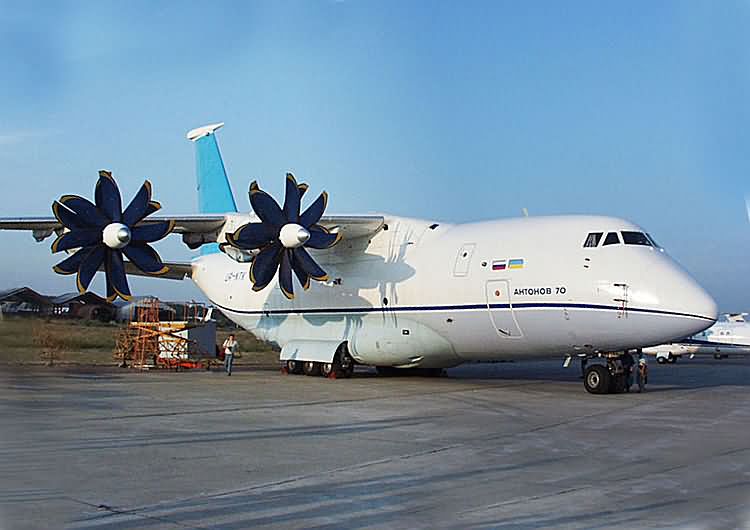
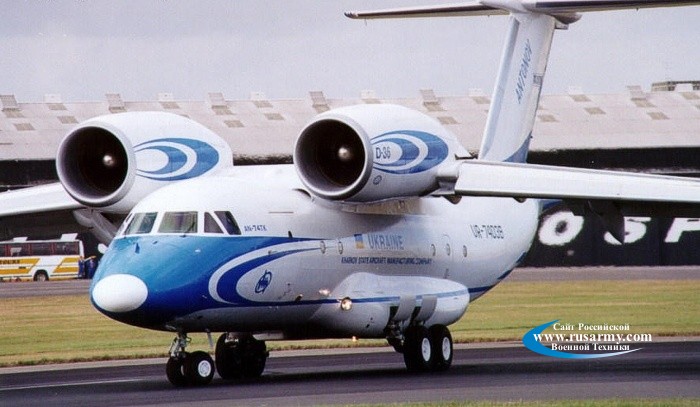
An-74T-200 Transport Aircraft 2 Ukraine On Order Antonov
TB-21 Training Aircraft 12 France On Order Socata
Y-7 Transport Aircraft 14 China In delivery Harbin
Zulfiquar Main Battle Tank n/a Iran Ongoing DIO
Tosan-1 anti-tank Guided Missile n/a Iran 1999 Domestic
AH-1J SeaCobra 1 Attack Helicopter 3 Iran/US 1999 Panha/Bell
Shahab-3 SSM n/a Iran 1999 Domestic
Shahab-2 SSM n/a Iran 1998 Domestic
F-7 Strike Aircraft 10 China 1998 Chengdu
T-72 Main Battle Tank n/a Russia/Iran 1998 Russian state arsenals (in kit form)
BMP-2 Armoured Infantry Fighting Vehicle 200 Russia/Iran 1998 Russian state arsenals (in kit form)
Boragh Armoured Infantry Fighting Vehicle 40 Iran 1996 DIO
C-801 Anti-Ship Missile 10 China 1996-97 CSSC
877 EKM 'Kilo' Submarine 3 Russia 1992-96 Malachite
Hegu Strike Craft 6 China 1995 CSSC
T-72 Main Battle Tank 100+ Poland 1994-95 Ex-Polish Army
Type 69-II Main Battle Tank n/a China 1994-95 Norinco
T-72M Main Battle Tank 200 Russia 1994 Various
T-72S Main Battle Tank 20 Ukraine 1994 Kharkov
M46 Field Artillery 100 Russia 1994 Various
D-30 Field Artillery 300 Russia 1994 Various
Igla Manportable SAM 100 Russia 1994 Various
Strela 3 Manportable SAM 100 Russia 1994 Various
Mi-17 Utility Helicopter 12 Russia 1994 Kazan (Mil)
MiG-29 Combat Aircraft 48 Russia 1993-94 Moscow MiG
Mi-24 Attack Helicopter n/a Russia 1993-94 Rostvertol
Su-24MK Strike Aircraft 24 Russia 1993-94 Sukhoi
Hegu Missile Craft 10 China 1993-94 CSSC
Red Arrow 8 anti-tank Missile 100 China 1993-94 Norinco
PC-7 Training Aircraft 15 Swiss 1993-94 Pilatus

1. Notes: Aircraft damaged during Iran-Iraq war and remanufactured by Iran.

Main Foreign Suppliers

Iran's military position deteriorated soon after the victory of the revolution in 1979, reinforced by the cancellation of several major arms deals with the UK and US. Two years into the war with Iraq, Iran's military superiority had begun to evaporate. Its air force could not generate more than 70 sorties per day, for example, and its land warfare capabilities were similarly depleted; its naval power to a lesser degree. By 1988, it could field only about 750 tanks and a similar number of armoured vehicles. This inventory depleted at an alarming rate over the last three years of the war, making complete rearmament a necessity for the new leadership. Iran's air and ground forces bore the brunt of the losses.

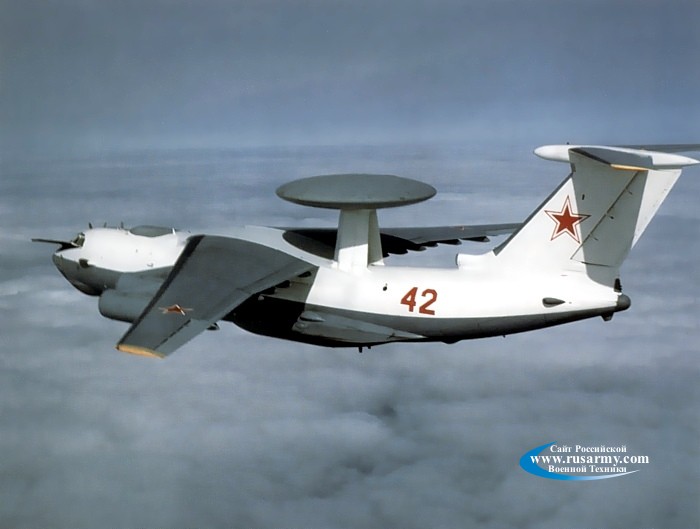
It is, however, the (1989) USD15 billion Iranian-Soviet trade and investment agreement which has provided the framework for the bulk of Iran's arms imports in the 1990s. As an important element of this agreement Moscow agreed to USD2 to USD4 billion worth of arms transfers and military assistance to Iran, and resolved to assist Iran in its 'peaceful nuclear programmes' - which has included a USD850 million deal for Russia to complete Iran's Bushehr nuclear reactor. It is also alleged that Iran has held extensive discussions at the highest level with Moscow regarding the possible purchase of the latest Soviet fighter aircraft, including the MiG-31 (priced at USD40 million each). Early deliveries of hardware have comprised mainly of the MiG-29 multirole aircraft. There are persistent reports that Iran has ordered equipment including 12 Tu-22M strategic bombers (either from Russia or Ukraine), 24 MiG-31s, 24 MiG-27s, two Beriev A-50 'Mainstay' AEW aircraft (a development of the Ilyushin-76), and 48 additional MiG-29s. Thus far there has been no concrete evidence of these orders materialising. Were these orders to be realised, then Iran would indeed be creating a formidable air force with sophisticated deep strike, interdiction, air defence, early warning and heavy bomber capabilities. In addition to the 130 Iraqi aircraft in its hangers and its existing force of some 280 combat aircraft, such deliveries would again make the IRIAF one of the largest and best equipped in the Middle East. Substantial imports of air defence equipment have also been made. The IRGC have already taken possession of Russian made SA-6 'Gainful' surface-to-air missiles, the Iranian Air Force has brought advanced S-300 (SA-10 'Grumble') missiles into service.

Iran seems to be pursuing a multilayered arms procurement strategy. First, it has been seeking sophisticated Soviet-made weapons from the former USSR and the Moscow's former Warsaw Pact allies, and standard Chinese-made and improved (Soviet designed) military hardware from China (and limited production rights too). Purchases from these sources have included military aircraft, tanks and armoured vehicles, artillery and multiple launch rocket systems, air-to-air, air-to-surface, surface-to-air and surface-to-surface missiles, munitions, electronic warfare equipment, submarines and airborne early warning platforms. With China, Tehran has negotiated major arms deals which include the sale of F-8 'Finback' fighters, as well as the supply of a variety of tactical missiles and modern T-80 and T-89 MBTs. Iran already possesses over 50 F-7 (MiG-21 equivalent) and 12 F-6 (MiG-19 equivalent) fighters and interceptors, in addition to some 260 T-59 main battle banks and HQ-2 surface-to-air missiles from China.

North Korea's relationship with Iran appears mostly limited to ballistic missiles, building on a long-standing missile relationship with Iran. During Iran's war with Iraq, North Korea provided Iran with about 100 Scud-B ballistic missiles, as well as facilities in which Iran could produce the Scud-B indigenously. North Korea also reportedly sold Iran conventional weapons, including mini-submarines and mines, and provided training to Iran's IRGC. In 1991, North Korea reportedly began to supply Scud-C missiles to Iran. Subsequently, North Korea assisted Iran's Shahab-3, which is thought to be a derivative of the 1,000 to 1,300 km range North Korean No-dong 1. Iran reportedly has asked North Korea to help upgrade the accuracy of the missiles. Iran might also be seeking to persuade North Korean to manufacture the missile - or provide Iran the technology to produce the missile itself - to compensate for China's cutoff of additional supplies of the C-802.

Arms Deliveries, 1995 to 1999
Country Value (Current USD million)
Russia 675
China 400
Other NATO (excluding UK, US) 10
Other Western Europe 20
Other East Europe (excluding Russia) 270
Other East Asia (excl China) 20
Others 10
Total 1,405
# Source: US Bureau of Arms Control
Reply With Quote
  #2  
Old 08-24-2006, 12:17 PM
Alex's Avatar
Alex Alex is offline
Super Moderator
 

Join Date: Aug 2006
Location: Sweden
Posts: 4,361
Alex Outstanding member Alex Outstanding member Alex Outstanding member Alex Outstanding member Alex Outstanding member Alex Outstanding member Alex Outstanding member Alex Outstanding member Alex Outstanding member Alex Outstanding member Alex Outstanding member
Send a message via MSN to Alex
Default

thanks for posting this but i feel like they trying to downgrade irans military
__________________

Check this Thread:http://www.irandefence.net/showthread.php?t=28044 Aryans Succeed!!!!!!!!!
The light in the eyes of the Believers in Truth.
Reply With Quote
  #3  
Old 08-26-2006, 03:26 AM
SS_Charlemagne SS_Charlemagne is offline
General
 

Join Date: Aug 2006
Posts: 1,779
SS_Charlemagne is on a distinguished road
Default

Quote:
Originally Posted by alex View Post
thanks for posting this but i feel like they trying to downgrade irans military
Yes, western media and "experts" always try it... see globalsecurity and other humorous sites...
Reply With Quote
  #4  
Old 08-26-2006, 02:28 PM
Alex's Avatar
Alex Alex is offline
Super Moderator
 

Join Date: Aug 2006
Location: Sweden
Posts: 4,361
Alex Outstanding member Alex Outstanding member Alex Outstanding member Alex Outstanding member Alex Outstanding member Alex Outstanding member Alex Outstanding member Alex Outstanding member Alex Outstanding member Alex Outstanding member Alex Outstanding member
Send a message via MSN to Alex
Default

iran got a good navy. airforce is the problem but soon the will fix that too
__________________

Check this Thread:http://www.irandefence.net/showthread.php?t=28044 Aryans Succeed!!!!!!!!!
The light in the eyes of the Believers in Truth.
Reply With Quote
  #5  
Old 04-23-2007, 04:36 PM
Mujahid786
Guest
 

Posts: n/a
Default

A 2001 agreement addressed the purchase of SU-27 and SU-30 jet fighters, KA-50 and KA-52 helicopters, and T-90 and T-82 tanks.

what the hell happened to that
Reply With Quote
  #6  
Old 05-11-2007, 07:23 PM
Mujahid786
Guest
 

Posts: n/a
Default

how come noone nswered?
Reply With Quote
  #7  
Old 07-02-2007, 03:22 PM
Mujahid786
Guest
 

Posts: n/a
Default

what r they playin at buying t72s and t62 and mig 25s that stuff is ****
Reply With Quote
  #8  
Old 07-02-2007, 05:39 PM
Alex's Avatar
Alex Alex is offline
Super Moderator
 

Join Date: Aug 2006
Location: Sweden
Posts: 4,361
Alex Outstanding member Alex Outstanding member Alex Outstanding member Alex Outstanding member Alex Outstanding member Alex Outstanding member Alex Outstanding member Alex Outstanding member Alex Outstanding member Alex Outstanding member Alex Outstanding member
Send a message via MSN to Alex
Default

Quote:
Originally Posted by mujahid786 View Post
what r they playin at buying t72s and t62 and mig 25s that stuff is ****
iran is not going to buy T-72, T-62 and mig-25. Iran is already licence producing T-72. and iran is not going to buy the other stuff.
__________________

Check this Thread:http://www.irandefence.net/showthread.php?t=28044 Aryans Succeed!!!!!!!!!
The light in the eyes of the Believers in Truth.
Reply With Quote
  #9  
Old 07-02-2007, 07:17 PM
Vladimir80's Avatar
Vladimir80 Vladimir80 is offline
General
 
Join Date: Jun 2007
Location: Russia once Again
Posts: 12,338
Vladimir80 Outstanding member Vladimir80 Outstanding member Vladimir80 Outstanding member Vladimir80 Outstanding member Vladimir80 Outstanding member Vladimir80 Outstanding member Vladimir80 Outstanding member Vladimir80 Outstanding member Vladimir80 Outstanding member Vladimir80 Outstanding member Vladimir80 Outstanding member
Default

Is there any article/info on IRIAF Mig-29 upgrade package?
Reply With Quote
  #10  
Old 01-08-2008, 04:26 PM
Intrn'l_relations101's Avatar
Intrn'l_relations101 Intrn'l_relations101 is online now
Grand Marshal
 

Join Date: Dec 2007
Location: Emerging economies
Posts: 15,062
Intrn'l_relations101 Outstanding member Intrn'l_relations101 Outstanding member Intrn'l_relations101 Outstanding member Intrn'l_relations101 Outstanding member Intrn'l_relations101 Outstanding member Intrn'l_relations101 Outstanding member Intrn'l_relations101 Outstanding member Intrn'l_relations101 Outstanding member Intrn'l_relations101 Outstanding member Intrn'l_relations101 Outstanding member Intrn'l_relations101 Outstanding member
Default

lets remember power is measured in relative terms not in absolute terms, therefore even if Iran pushes for upgrading in the near futurre by that time the potential adversaries have developed to a point of greater superiority... especially those on the extreme side of the IR spectrum... Vlady your previous picture from times mag. was better..
__________________
"I have no religion, but if I were to choose one, it would be that of Shariati's."
-Jean-Paul Sartre

A witty saying proves nothing.
Voltaire

Last edited by Intrn'l_relations101; 01-08-2008 at 04:29 PM.
Reply With Quote
  #11  
Old 01-08-2008, 04:35 PM
Intrn'l_relations101's Avatar
Intrn'l_relations101 Intrn'l_relations101 is online now
Grand Marshal
 

Join Date: Dec 2007
Location: Emerging economies
Posts: 15,062
Intrn'l_relations101 Outstanding member Intrn'l_relations101 Outstanding member Intrn'l_relations101 Outstanding member Intrn'l_relations101 Outstanding member Intrn'l_relations101 Outstanding member Intrn'l_relations101 Outstanding member Intrn'l_relations101 Outstanding member Intrn'l_relations101 Outstanding member Intrn'l_relations101 Outstanding member Intrn'l_relations101 Outstanding member Intrn'l_relations101 Outstanding member
Default

Iran is clearly aware it lacks offensive air capacity therefore its pushing for full defenssive shield building systems..
__________________
"I have no religion, but if I were to choose one, it would be that of Shariati's."
-Jean-Paul Sartre

A witty saying proves nothing.
Voltaire
Reply With Quote
  #12  
Old 01-08-2008, 05:15 PM
Vladimir80's Avatar
Vladimir80 Vladimir80 is offline
General
 
Join Date: Jun 2007
Location: Russia once Again
Posts: 12,338
Vladimir80 Outstanding member Vladimir80 Outstanding member Vladimir80 Outstanding member Vladimir80 Outstanding member Vladimir80 Outstanding member Vladimir80 Outstanding member Vladimir80 Outstanding member Vladimir80 Outstanding member Vladimir80 Outstanding member Vladimir80 Outstanding member Vladimir80 Outstanding member
Default

That article makes Iran sound like it is stuck in the early 70s.
Reply With Quote
  #13  
Old 01-08-2008, 05:44 PM
Intrn'l_relations101's Avatar
Intrn'l_relations101 Intrn'l_relations101 is online now
Grand Marshal
 

Join Date: Dec 2007
Location: Emerging economies
Posts: 15,062
Intrn'l_relations101 Outstanding member Intrn'l_relations101 Outstanding member Intrn'l_relations101 Outstanding member Intrn'l_relations101 Outstanding member Intrn'l_relations101 Outstanding member Intrn'l_relations101 Outstanding member Intrn'l_relations101 Outstanding member Intrn'l_relations101 Outstanding member Intrn'l_relations101 Outstanding member Intrn'l_relations101 Outstanding member Intrn'l_relations101 Outstanding member
Default

well thats the reality.. Iran is keep on improving whats essentially crude..
__________________
"I have no religion, but if I were to choose one, it would be that of Shariati's."
-Jean-Paul Sartre

A witty saying proves nothing.
Voltaire
Reply With Quote
Reply


Currently Active Users Viewing This Thread: 1 (0 members and 1 guests)
 
Thread Tools
Display Modes

Posting Rules
You may not post new threads
You may not post replies
You may not post attachments
You may not edit your posts

BB code is On
Smilies are On
[IMG] code is On
HTML code is Off
Forum Jump

Similar Threads
Thread Thread Starter Forum Replies Last Post
Iranian Military Exports user0000 Army 4 07-12-2008 11:04 AM
Iran-Iraq War 1980-1988 admin Military Articles 3 04-05-2008 03:34 PM
The United States and Iran-Iraq War 1980-1988 admin Military Articles 19 11-08-2006 06:44 PM
Is the Bush Administration Planning a Nuclear Holocaust? Wanklord Nuclear And Strategic Missiles 11 08-30-2006 12:50 AM
Petrodollar Warfare: Dollars, Euros and the Upcoming Iranian Oil Bourse Wanklord Iran's Military & Strategic Discussion Forum 2 03-05-2006 08:00 AM


All times are GMT -5. The time now is 05:38 AM.


IranDefence.net is an independent forum that is not associated with the Iranian Government. IranDefence.net is not affiliated with any governmental or regulatory agencies.
IranDefence.net is not related to any political or religious entity.

LEGAL DISCLAIMER: IranDefence.net is not responsible for the content posted in its public forums.
The opinions expressed in IranDefence.net forums represent only those who post them and do not necessarily reflect the beliefs of the IranDefence.net team, or any of its subsidiaries, or its parent organization.

Copyright ©2008 IranDefence.net

Powered by vBulletin® Version 3.7.0
Copyright ©2000 - 2010, Jelsoft Enterprises Ltd.